
The paradigm of kinetic energy distribution is shifting from centralized thrust vectors to autonomous, modular nodes. This transition demands a new archival logic—one where precision engineering meets fluid scalability.
01. The Core Synchrony Problem
In traditional systems, the overhead of synchronization creates a latency bottleneck that inhibits real-time response. At NUCLEAUS, our lab has pioneered a 'Kinetic Buffer' that pre-calculates inertial trajectories before physical deployment. This reduces effective response time to sub-millisecond ranges, enabling complex swarming maneuvers that were previously computationally prohibitive.
The archival nature of this project means every iteration is logged within the Nucleaus Kinetic Terminal. This isn't just about building faster engines; it's about building a searchable history of kinetic truth.
Modular Integration
Each engineering module acts as a standalone unit, capable of hot-swapping during peak load without interrupting the primary data stream. This modularity is reflected in our software architecture, utilizing the 'Bento' design pattern to containerize logic and UI components alike.
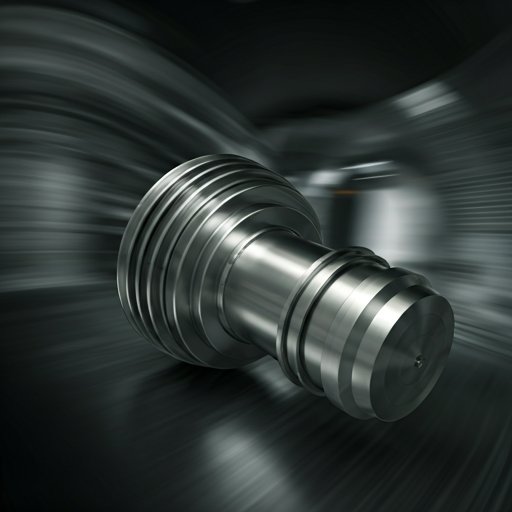
Secondary cooling fins with integrated thermal dissipation units.

Kinetic energy recovery system (KERS) prototype for sustained orbital flight.
As we move toward the 2025 roadmap, the focus shifts to 'Deep-Link' archival—where the history of a part's physical stress is encoded directly into its digital twin.
02. Atomic Capability Modeling
In the modern engineering ecosystem, static benchmarks are insufficient. Nucleaus decomposes propulsion architecture into a living system of atomic capabilities. By mapping high-level mission objectives down to granular functional nodes, we create a structured, comparable view of performance that evolves in real-time. This bottom-up approach ensures that market structure is derived from technical reality rather than marketing narratives.
Our capability matrices allow for objective scoring across vendor ecosystems, surfacing performance discrepancies that are often obscured by legacy reporting frameworks. By maintaining this high-fidelity model, engineers can simulate integration outcomes before a single line of code is committed to hardware, drastically reducing the cost of iterative failure.
03. Signal Over Sentiment
Market velocity demands an ingestion-ready approach to intelligence. Raw data from telemetry, public repositories, and edge-case deployments are translated into decision-grade signals. This transformation process relies on deep tech scores that evaluate the core robustness of distributed propulsion systems, moving beyond subjective rankings to a measurable system of record for technological change.
Kinetic Swarm Dynamics: Live Telemetry Visualization
Experience the power of Nucleaus firsthand. By empowering engineering teams with structured, objective data, we enable the next leap in distributed execution—grounded in technical reality and optimized for the high-velocity requirements of tomorrow's aerospace landscape.